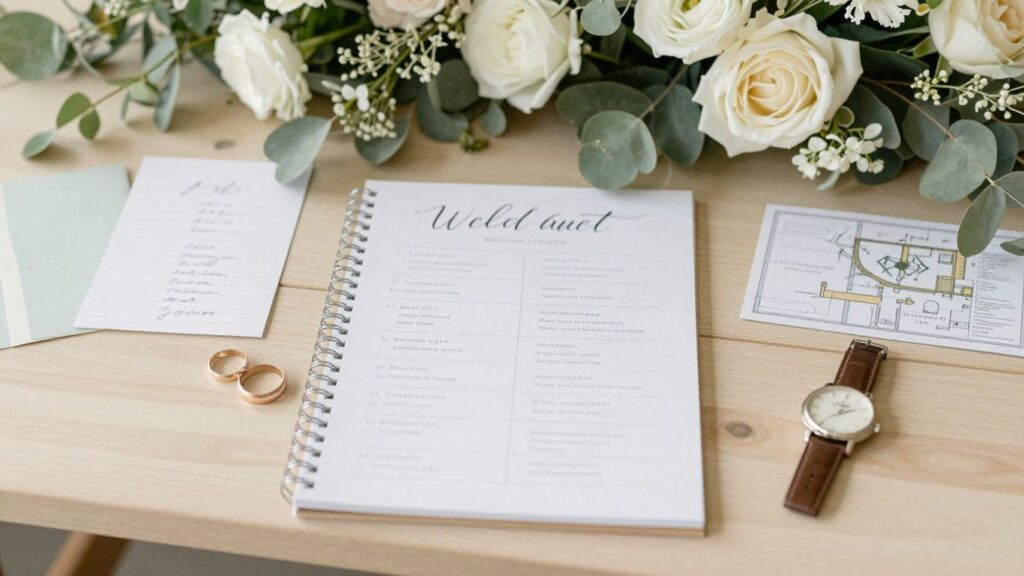
Start with the wedding-day details that shape your timeline
A useful wedding timeline template begins with the shape of your day, not with a standard list of times. Before you add appointments or supplier arrivals, establish what is happening, where it is happening, and who needs to be present. These details affect every later decision, from hair and makeup to transport home. A clear starting point also helps you avoid building a schedule that looks tidy but cannot work in practice.
Confirm the ceremony type, location, and start time
Start by recording whether your ceremony is civil, religious, cultural, outdoor, or held in another format. The ceremony style may affect its length, the order of participants, and any preparation required beforehand. Write down the exact venue address, access point, and confirmed start time rather than relying on a broad estimate.
The ceremony start is the main anchor for the first half of the day. Work backwards from it, allowing time for guests to arrive, the wedding party to line up, and everyone to settle before the processional begins. If the ceremony and reception are in the same venue, you may gain time, but you should still allow for room changes and guest movement.
Account for travel between venues
Travel time should include more than the distance shown on a map. Consider loading, parking, traffic, finding the correct entrance, and helping members of the wedding party leave one location and arrive at the next. If several cars are involved, the slowest or least familiar journey may determine the practical departure time.
List each movement as its own line in the schedule. For example, travelling from the preparation venue to the ceremony, from the ceremony to portraits, and from portraits to the reception may each require a different plan. Add a small cushion so a minor delay does not immediately affect the ceremony or meal.
A compact travel check can make this part easier:
- Confirm the full address and the best arrival entrance.
- Check where cars can wait, unload, and park.
- Allow time for gathering people and personal items.
- Nominate someone to confirm when the group is ready to leave.
Once these details are written down, your transport plan becomes more useful than a single journey estimate. Share the relevant information with drivers and the person coordinating the wedding party, since they may need to make decisions on the day.
Estimate the guest count and wedding party size
Your guest count affects the time needed for seating, group photographs, meal service, and movement between spaces. The wedding party size matters just as much during the morning, when several people may need hair, makeup, refreshments, dressing space, and photographs. Use your latest realistic numbers rather than the first estimate you made during planning.
Ask the venue how long it expects guests to enter, find seats, and move between areas. A small ceremony may settle quickly, while a larger group may need clear signs, ushers, or extra time at the entrance. These details are especially helpful when the ceremony and reception have different layouts.
Identify cultural, religious, or logistical requirements
Some wedding days include rituals, readings, blessings, quiet preparation, family customs, or formal movements that do not fit a generic schedule. Ask the relevant family members, celebrant, religious leader, or cultural adviser what needs to happen and when. Confirm who must be present, what spaces are required, and whether any part of the day should remain private.
Logistical requirements matter too. You may need a private room for personal vows, accessible paths for guests, a meal for suppliers, or a secure place for gifts. Put these needs into the timeline early, because they can affect venue setup, photography, transport, and staffing.
Build the timeline around fixed events
Once the basic details are clear, place the events that cannot move easily. The ceremony, venue access, meal service, transport bookings, and any fixed entertainment commitments should form the framework of your schedule. Everything more flexible can then be fitted around those points. This approach gives your wedding timeline template a sensible rhythm without making every minute feel rigid.
Set the ceremony and reception milestones
Write down the confirmed ceremony start and finish, guest arrival period, reception opening, meal service, and planned end time. If the venue has a strict closing time or a set catering window, treat those details as fixed. Include the time required to reset a room if guests will move from one space to another.
It can help to mark the milestones visually so they stand apart from smaller tasks. Your schedule should make it obvious when the day changes phase: preparation, ceremony, drinks, meal, formalities, dancing, and departure. This gives suppliers and the wedding party a shared reference when the day becomes busy.
Schedule the processional, speeches, and first dance
Formal moments need more preparation than their visible duration suggests. The processional may require people to line up, check the order, and receive a final cue. Speeches need microphones, a place to stand, and a person who knows who is speaking next. The first dance may also require the floor to be cleared and music to be ready.
Ask each person involved how long they expect to need, while keeping the final schedule simple. You do not need to publish every behind-the-scenes cue to every guest, but the coordinator, venue, and entertainment team should know the order. Clear handovers reduce confusion when several people are working at once.
Plan the meal, cake cutting, and open dancing
Coordinate meal service with the venue or caterer before you place speeches or performances around it. Guests generally need enough time to eat without feeling hurried, and the service team may need quiet periods to clear plates or prepare the next course. Cake cutting and open dancing can follow the meal, or you can use them as a transition if that suits the room and your guests.
Think about where the cake will be positioned, whether a knife and serving table are ready, and who will invite guests to watch. If dancing is a priority, avoid filling the evening with so many formalities that there is little time left for it. Your schedule should support the atmosphere you want, not simply fit in every possible activity.
Add buffer time between major activities
A buffer is not wasted time. It gives you room for late arrivals, a longer conversation, a clothing adjustment, a slow room change, or a few extra photographs that matter to you. Place buffers after activities that commonly run over, rather than hiding one large blank space at the very end of the day.
When reviewing the gaps, ask what would happen if the preceding event ran a little late. A flexible transition between portraits and the reception may be more useful than a short gap between two tightly managed supplier tasks. Build in enough breathing room for the day to feel comfortable, while still giving the team a clear next step.
A good wedding timeline guides the day without asking real people to behave like a stopwatch.
Use that principle when deciding whether a gap is genuinely useful. If the schedule leaves no time to greet family, take a breath, or solve a small problem, it may be technically full but practically stressful.
Create a getting-ready schedule that works
The preparation period often looks relaxed from a distance, yet it contains many separate appointments and decisions. Hair, makeup, breakfast, dressing, photographs, personal messages, and travel all compete for the same morning. Start with the ceremony and work backwards, leaving enough time for people to finish rather than simply begin. The best schedule gives you structure without turning the morning into a rush.
Decide when hair and makeup should begin
Ask the hair and makeup team how long each service takes and whether any people require more time. The person getting married should usually have a clear finishing window, rather than being the last appointment with no room for dressing or photographs. Include time for touch-ups and for the team to pack away before everyone leaves.
The preparation location matters as well. A bright, comfortable room with enough seating may help the morning run smoothly, while a crowded room can slow every appointment. Confirm where artists can work, where finished people can wait, and when the photographer can enter without interrupting the services.
Assign preparation times for each member of the wedding party
Create a simple appointment order and send it to the wedding party before the wedding week. Give each person a time to be ready for hair, makeup, dressing, or photographs, and explain whether they should arrive already prepared. Avoid assigning so many consecutive appointments that one late start affects everyone who follows.
Include practical pauses for food, water, bathroom breaks, and checking personal belongings. Someone should be responsible for watching the clock and quietly reminding people when they need to move. This does not have to be the person getting married, who should be able to remain present rather than manage every detail.
Plan photography for detail shots and getting-ready moments
Tell the photographer which details and moments matter to you, then allow them a realistic window to capture them. Items might include clothing, rings, flowers, invitations, shoes, family gifts, or the room itself. Gather these items in one place before the photographer arrives so the session does not become a search around the house or hotel.
Getting-ready photographs work best when the room has some breathing space. Clear unnecessary bags and clutter from the areas likely to appear in photographs, but do not try to make the whole location perfect. Allow time for natural interactions as well as planned images, since the quiet morning moments may become some of your favourite memories.
Coordinate dressing, private vows, and first-look photos
Dressing, private vows, and a first look each require privacy, timing, and the right people in the right place. Decide whether these moments happen separately or in sequence, and confirm who should be present. If you are exchanging private vows, allow time to settle before the ceremony rather than placing the moment directly beside a departure deadline.
Tell the photographer and the person coordinating the day where each moment will happen. Prepare an alternative location if weather, noise, or an unexpected room change affects the original plan. A little privacy in the schedule can make these moments feel unhurried and personal.
Organize the photography and transportation windows
Photography and transport often overlap, so they need to be planned together rather than treated as separate tasks. The photographer needs access to people and locations, while the driver needs a group that is ready to leave. If either plan is vague, the delay can spread through the ceremony, portraits, and reception. Give each window a clear purpose and a named person responsible for keeping it moving.
Prioritize must-have wedding photos
Prepare a short list of essential photographs and group them by location or people involved. Include immediate family, the wedding party, meaningful individuals, and any specific detail or cultural photographs you want. Discuss the list with the photographer so you understand what can be captured before the ceremony, during the portrait period, or later in the day.
Keep the list focused enough to be useful. A very long list can make the portrait period feel like administration, particularly when people are moving between rooms. Mark the photographs that matter most, then allow the photographer to capture the rest naturally if time permits.
Group portraits to reduce waiting time
Organise group photographs in an order that brings people in and releases them quickly. Start with larger groups if they involve people who are not needed for later photographs, then move to smaller combinations. Ask a family member or member of the wedding party to help locate people and check names.
Share the portrait list and meeting point before the day. Guests should know where to wait, and the photographer should not need to leave the session to find someone. Grouping portraits by location also reduces repeated movement and makes the available window more realistic.
Schedule couple portraits around daylight
Check the likely daylight conditions for your date and location, then discuss the best portrait windows with your photographer. You may prefer photographs shortly after the ceremony, during a drinks break, or later when the light changes. Consider heat, shade, weather, footwear, and how long you want to be away from guests.
If daylight portraits are a priority, protect that time from being filled with additional formalities. You can often make the session feel more relaxed by choosing one nearby location instead of attempting several distant spots. Let the photographer know which visual settings matter to you, while leaving room for their judgement on the day.
Coordinate transportation for the couple and wedding party
Confirm who is travelling in each vehicle, where each vehicle will wait, and who has the keys or booking details. Include loading time for flowers, clothing bags, gifts, and other personal items. The person coordinating transport should know when the group must be ready, not only when the vehicle is due to arrive.
Have a simple plan for changes. If a car is delayed, you may need to alter the portrait location or ask another vehicle to collect someone. Record the relevant contact details and make sure at least one trusted person, other than the couple, can communicate with drivers.
Customize the reception portion of your template
The reception should reflect how you want guests to spend their time, whether that means a long meal, lively dancing, relaxed conversation, or a mix of all three. Begin with the venue’s service plan and then add the formal moments around it. Leave enough flexibility for guests to enjoy themselves rather than moving them from one announcement to the next. A template is useful here because you can test the order before sharing it.
Choose the right order for formalities
Consider when guests will be most attentive and when the room is easiest to manage. You might place introductions and the first dance near the start, schedule speeches between courses, or hold the cake cutting later in the evening. There is no single correct order; the right choice depends on your venue, meal style, family plans, and preferred atmosphere.
Ask the venue and entertainment team whether your proposed order creates practical issues. For example, a speech may be difficult during plate clearing, while a first dance may work best after the floor has been made available. Keep the sequence easy for the master of ceremonies or nominated host to announce.
Balance dinner service with entertainment
Meal service should remain the anchor of the dining period. Entertainment can add energy, but it should not interrupt guests every few minutes or make the catering team work around an unclear schedule. Ask when each course is expected, when the room needs to be cleared, and how much uninterrupted time guests need to eat.
If you are including live music, a performance, or another activity, place it where it adds to the flow. Shorter entertainment windows may be easier to enjoy than several long interruptions. Keep the evening moving, but do not confuse constant activity with a successful reception.
Plan transitions for speeches and performances
Every transition needs a cue, a person responsible, and a place for the next activity to happen. Confirm who introduces each speaker, who checks the microphone, and who tells the performers when the room is ready. These small details prevent long pauses and reduce the chance that a speaker is looking for equipment while guests wait.
Write the cues into the detailed version of the schedule, then give the host a shorter running order. Check whether performers need a private waiting area, access to power, or time to set up. The more clearly these requirements are handled before the reception, the less attention they demand during it.
Leave room for spontaneous moments and guest interaction
Some of the best reception memories are not scheduled. A relative may want a photograph, guests may linger over a conversation, or you may want to spend a few extra minutes with someone who travelled a long way. Protect a little open time so these moments can happen without immediately putting the next activity behind schedule.
You can create this flexibility by shortening the formal running order, adding a pause after dinner, or keeping one portrait window optional. Tell the coordinator which parts are priorities and which can move if the room has a different energy than expected. A calm schedule gives you permission to be present.
Share the wedding timeline with the right people
A detailed schedule is only useful when the people who need it can understand and use it. You may need one version for suppliers, another for the wedding party, and a quick reference for the person coordinating the day. Each version should contain the right level of information rather than every planning note. One clear source of truth can prevent conflicting instructions.
Create separate versions for vendors and the wedding party
Suppliers generally need arrival times, access instructions, setup requirements, contact details, venue information, and the running order. The wedding party may only need their own preparation time, ceremony role, portrait window, transport plan, and reception cues. Close family members may need a slightly different selection again.
Create the full operational version first, then remove details that do not apply to each group. This keeps the wedding party from overlooking their own instructions in a long document. Keep the wording consistent across versions so a changed time does not create confusion.
Include contact details and arrival instructions
Add the names and phone numbers of the people responsible for the venue, catering, photography, transport, entertainment, and day-of coordination. Include the venue address, delivery entrance, parking instructions, access restrictions, and any security or check-in process. Make it clear who should be contacted for an urgent issue instead of directing every question to the couple.
Check that the contact information is current before distribution. Some suppliers may prefer a coordinator or venue contact to handle communication during the event. Put the most important details near the beginning of the supplier version so they can be found quickly on a phone or printed page.
Assign responsibilities for setup, gifts, and personal items
Name a person for each practical responsibility rather than writing that it belongs to “someone”. Tasks may include placing stationery, collecting personal flowers, receiving gifts, taking cards home, checking the preparation room, or gathering belongings after the reception. Choose people who are comfortable with the task and will not be pulled into another essential role.
Confirm when each responsibility starts and where items should go. A labelled box, a nominated vehicle, or a secure venue room can prevent confusion later. The couple should not be the default solution for every forgotten item, particularly during the ceremony and reception.
Distribute the final schedule before the wedding week
Send the final timeline early enough for suppliers and key participants to raise questions. Avoid making daily changes once the schedule has been distributed unless a genuine update requires them. Ask recipients to confirm that they have received the correct version and understand any responsibility assigned to them.
Keep a record of the final version and note the date it was issued. Print copies for the venue, coordinator, and another trusted person if that is practical. Digital access is helpful, but a paper copy can be useful when phones are busy, flat, or out of reach.
Review and finalize the wedding timeline
The final review is where you test whether the schedule works for real people in real spaces. Read it from the perspective of the couple, a guest, a supplier, and the person coordinating the day. Look for hidden assumptions, repeated travel, missing handovers, and times that leave no room for ordinary delays. This is also the point to simplify anything that has become more complicated than necessary.
Check every transition for realistic timing
Read each line together with the one before and after it. Ask whether people have enough time to finish, move, find the next location, and understand what happens next. Include the time needed to clear a room, gather a group, change clothing, or locate equipment, not just the visible activity.
Pay particular attention to transitions involving many people. A five-minute move may work for two suppliers but not for an entire wedding party carrying personal items. If a transition feels tight on paper, adjust it before the day rather than hoping everyone will move faster.
Confirm details with the venue and vendors
Send the relevant schedule to the venue, caterer, photographer, celebrant, entertainment team, transport providers, and anyone else with an operational role. Ask them to check arrival times, access, setup, meal service, equipment, room changes, and the planned finish. Their practical knowledge may reveal a restriction that is not obvious from your draft.
Record agreed changes in one master copy. Do not rely on separate messages or memory, especially when several suppliers are involved. Once the details are confirmed, distribute the updated version to everyone affected by the change.
Prepare backup plans for weather and delays
A backup plan should be specific enough to use quickly. Decide where outdoor photographs, ceremonies, drinks, or guest movement will happen if weather changes. Confirm who makes the call, when the decision is made, and how guests and suppliers will be told.
Consider other likely disruptions as well, such as a delayed vehicle, a missing item, a late speaker, or a room that is not ready. You do not need a solution for every imaginable problem. Focus on the changes that would affect the ceremony, guest comfort, photography, transport, or meal service.
Keep a simplified day-of version for quick reference
The detailed schedule is valuable for planning, but the person coordinating the day may need a shorter version during the event. Include the major times, locations, supplier contacts, transport movements, formalities, and key responsibilities. Remove background notes that will slow down a quick decision.
Print or save the simplified version in an easy-to-find format. Give it to the coordinator and one trusted backup person, and make sure both know which document is current. The detailed plan can remain available when questions arise, while the short version keeps the day moving.
Conclusion
A wedding timeline template works best when it reflects your ceremony, people, venues, travel, priorities, and likely delays. Build it around fixed events, protect time for preparation and photographs, give each responsibility to a named person, and share only the information each group needs. A well-planned schedule will not control every moment, but it can make the day easier to follow, kinder to the people helping you, and more enjoyable for you and your guests.